Build the Andrew Berry Statue

After a near-perfect draft from Andrew Berry in 2025, many fans thought that it was probably a fluke and that he had no chance of repeating that success this offseason. Instead, he proved everybody wrong – and we finally got to see AB at his full potential in his first summer without Kevin Stefanski and Paul DePodesta. On paper, this year’s draft is even better than last year’s – and if these players turn out like I think they will, almost every single one of them could be a contributor from very early on.
Round 1, Pick 9: Spencer Fano, OT, Utah
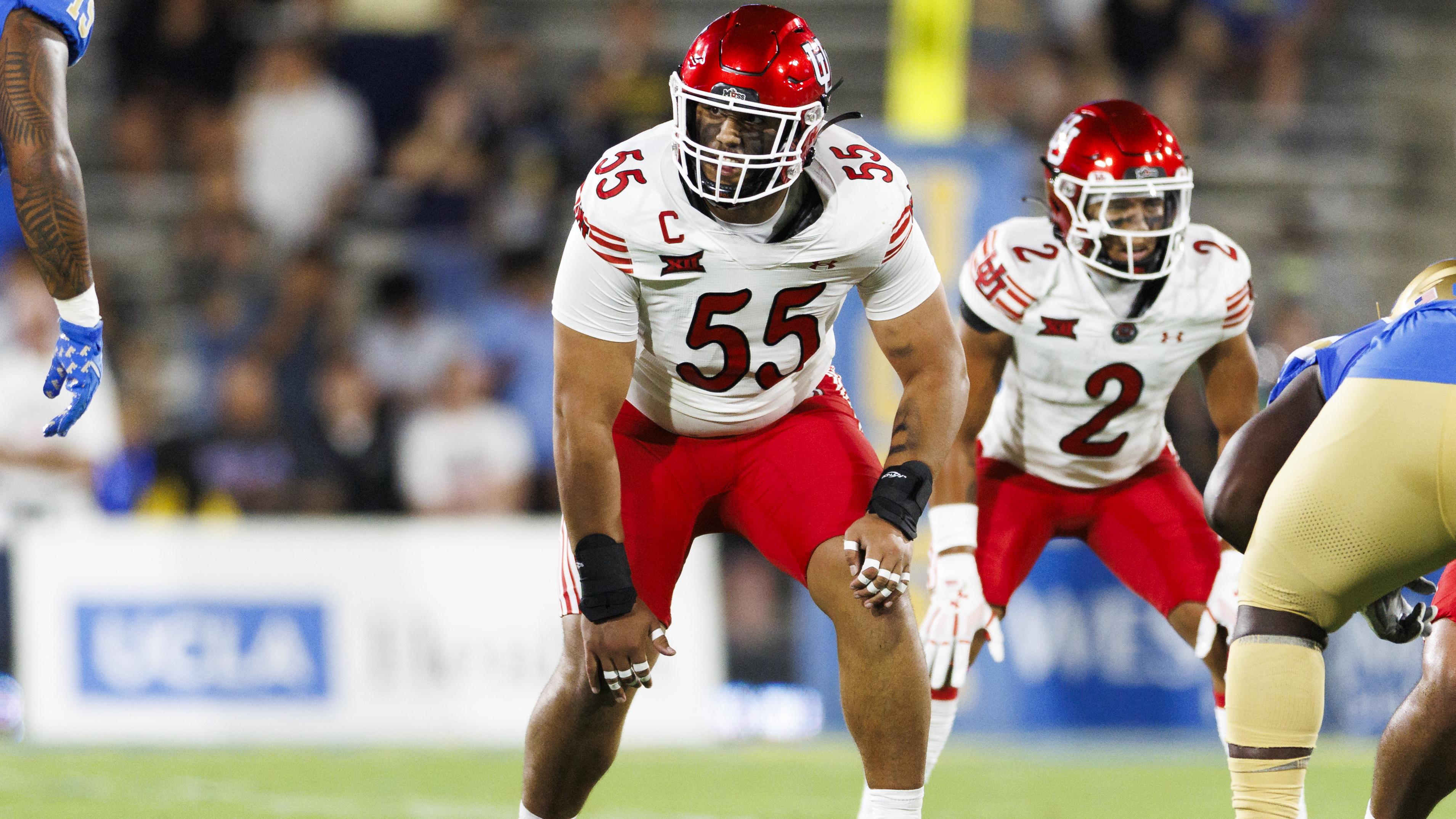
As someone who mocked Spencer Fano to Cleveland at 6th overall back in November, there was nobody more thrilled about this pick than me – but what makes it even better is that we were able to pick up third- and fifth-round picks while still getting the player that we wanted. Francis Mauigoa was the only other player worth considering with the pick, as the other best tackle in the draft, but I’m becoming more convinced by the day that Berry and his staff made the right choice. Not only does Mauigoa have back problems, but he played right tackle his whole career, while Fano spent time playing both – and the Jedrick Wills experiment surely played a huge role in AB not wanting to plug Mauigoa in on the left side.
Spencer Fano’s arms might be short, but he’s an incredibly reliable run blocker and pass protector who only gave up three sacks in three seasons as a starting tackle for Utah – and he has the versatility to play any of the five positions on the offensive line (though he’s almost certainly our starting left tackle for the time being). Even if NFL-sized defensive linemen end up forcing him to make the move inside to guard, I stand firm on my prediction that he’s going to provide us with a decade or more of Pro Bowl-level football.
Round 1, Pick 24: KC Concepcion, WR, Texas A&M
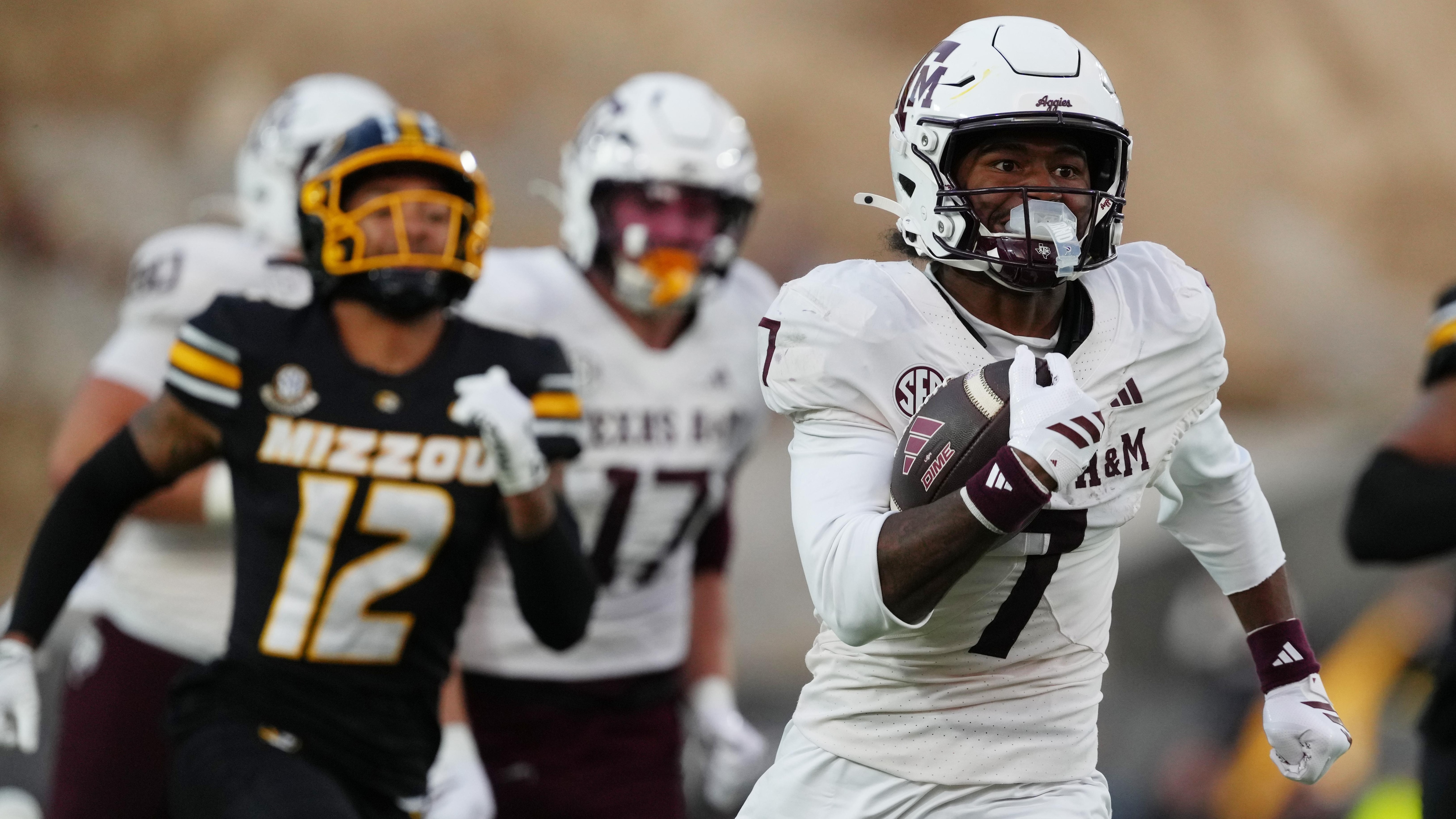
After taking a tackle with the 9th pick, everybody watching the draft knew the Browns were taking a wide receiver at 24. The only question was which one we would take: Concepcion, Cooper, or Boston? The former two are smaller receivers (both 6’0”) who excel at route running; KC Concepcion has incredible speed and acceleration, but dropped nearly 10% of his passes in college, while Omar Cooper Jr. lacks that high-end speed but only dropped five passes in his entire career. Denzel Boston is much bigger and also lacks the speed to create too much separation, but his size allows him to box out defenders and reach the ball regardless of how little space he has. Of course, the front office chose Concepcion, who I agree is the best choice of the three.
While drops were a glaringly obvious issue in our receiving room last season, it’s still much easier to teach a player to catch than it is to teach speed. It feels important to mention that despite the drops, Concepcion still accounted for 27% of all Texas A&M receiving yards and 35% of the team’s receiving touchdowns in 2025. Another interesting thing to note is that Zay Flowers – who Todd Monken drafted and developed and who many analysts are using as KC Concepcion’s pro comparison – had an even higher drop rate (10.4%) than Concepcion in college but is down under 6% as a Raven. If Coach Monken can replicate that kind of success, then KC is going to be a great NFL player – though the rest of our wide receiver room (particularly Jerry Jeudy) will hopefully benefit as well.
Round 2, Pick 39: Denzel Boston, WR, Washington
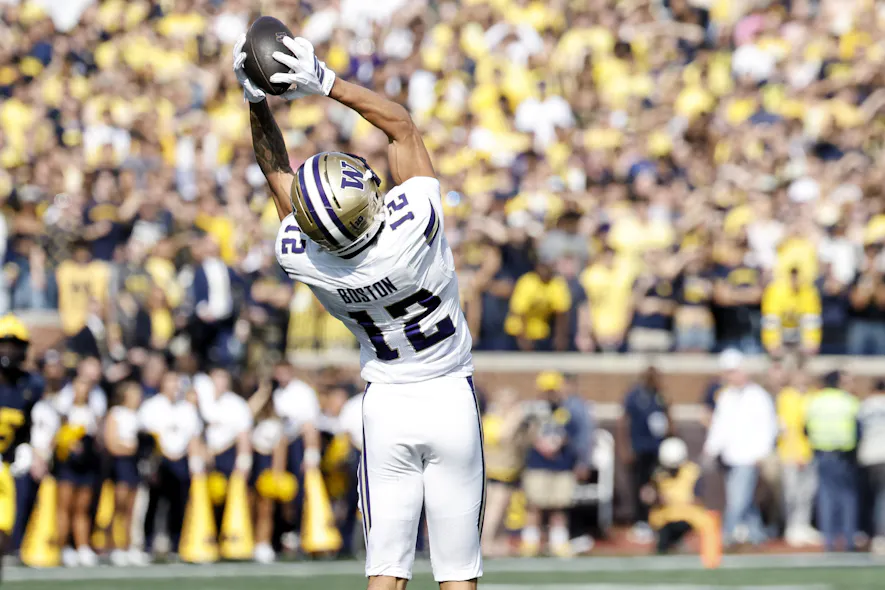
I have to give a special shoutout to John Lynch, the general manager of the 49ers, because I couldn’t believe my eyes when he submitted the 33rd pick on Friday night. I do think De’Zhaun Stribling will be a very good wide receiver someday – especially with the relative lack of competition he’s facing in a wide receiver room consisting of Christian Kirk, Ricky Pearsall and an elderly Mike Evans – but most analysts regarded him as a late-round-three pick at best, while Boston was a consensus top-six receiver. That being said, I’m not complaining – as Andrew Berry took full advantage of it and brought in Denzel Boston at 39.
As I mentioned earlier, Boston is a big outside receiver who lacks the speed to consistently get separation against man coverage, but he makes up for it with his sure hands and ability to attack the football. He may not have great YAC ability like KC Concepcion, but he does provide an incredibly reliable red-zone target – scoring over 42% of Washington’s receiving touchdowns in 2025. Even when teams know it’s likely going to him, he goes up and gets the ball anyway – and a player like that is something this offense hasn’t had in a long while.
Round 2, Pick 58: Emmanuel McNeil-Warren, S, Toledo

This move is what sealed this draft as an Andrew Berry masterclass in my eyes, as McNeil-Warren is another player that I am absolutely shocked fell this far (and the Browns didn’t even have to give up that much to trade up for him). What he’s missing in raw athleticism, he makes up for in size and aggression, forcing 13 turnovers in his three seasons as a starter – and while this aggression can sometimes cause over-commitment and missed tackles, I have complete faith in our defensive coaching staff to refine his game. Cornerback may have been a bigger need than safety heading into this draft, but the value of a player this good at a pick this late is just impossible to pass up. If he had transferred to an SEC school before his senior year, I have no doubt that McNeil-Warren would’ve been off the board long before pick 58. It’s why I’m extremely confident in his ability to carve out a role for himself in a safety room already occupied by Grant Delpit and Ronnie Hickman.
Round 3, Pick 86: Austin Barber, OT, Florida

Many fans are calling this pick the sole stain on an otherwise perfect draft class from Andrew Berry, but I personally think it was a great move. Like Spencer Fano, Barber played both left- and right-tackle in college – but unlike Fano, he made the move from right to left after his rookie season rather than from left to right. He’s certainly less consistent in the pass game than our first-round pick, but his agility and power make him a very effective run blocker when he’s on the move and climbing to the second level. A move to guard would probably maximize his potential, allowing him to get more involved in the run game while also giving him less ground to cover in pass blocking sets – so while it might be unlikely that he ever starts at tackle for the Browns without rapid development, expect Barber to give the interior linemen a run for their money as early as this offseason. At his floor, he’s a depth piece with unteachable size – and we’ve been in dire need of both depth and size on our offensive line for years now.
Round 5, Pick 146: Parker Brailsford, C, Alabama
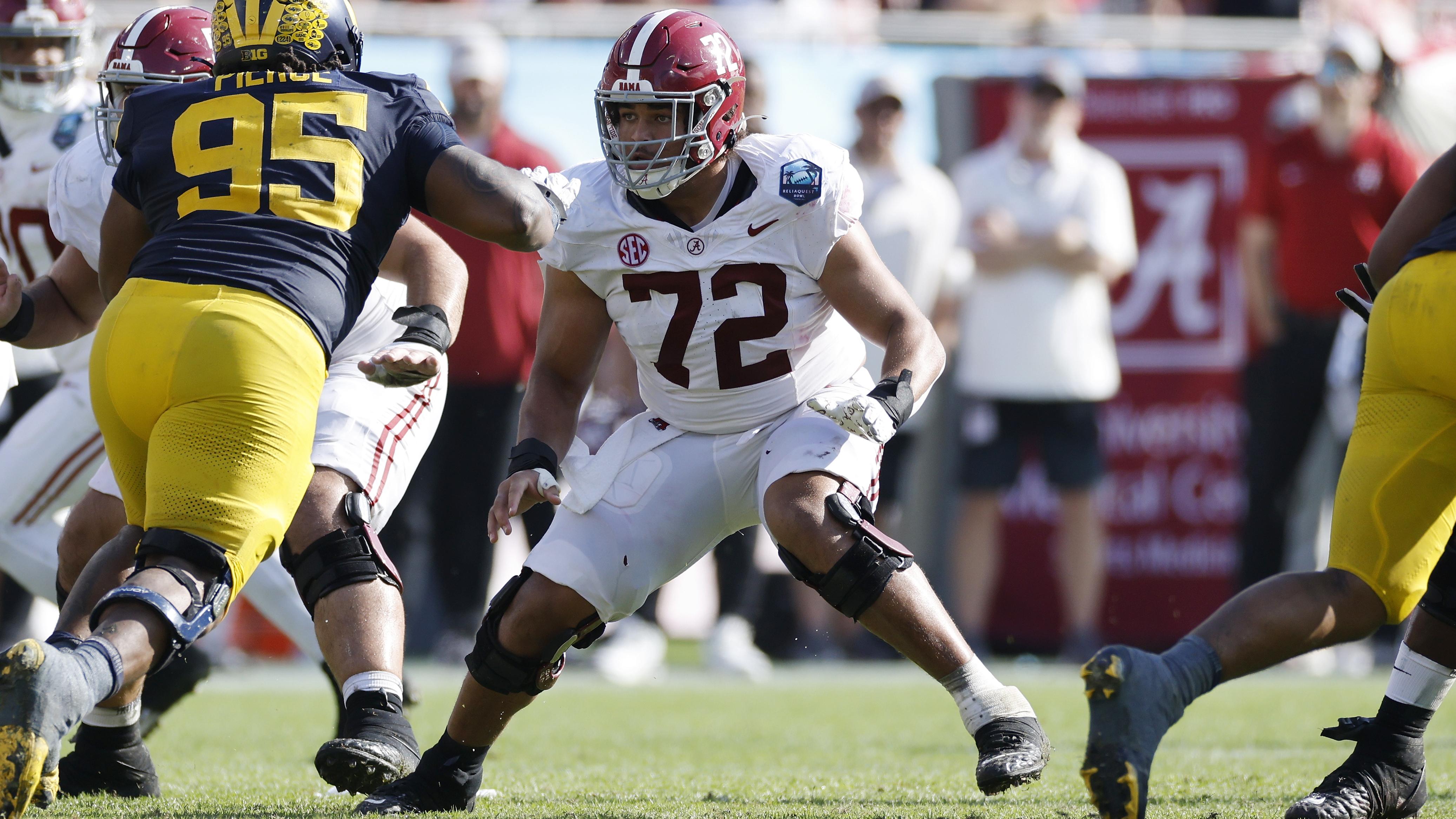
When one of the best centers in the country is your worst draft pick, you’re doing something right. He’s very good in pass protection and holds his ground consistently, but struggles in the run game, likely because of his size – 6’2” measured in at just the 21st percentile for centers’ heights in the draft and his 289 pounds was just 6th percentile in weight. Brailsford is almost certainly a depth piece for now, as Elgton Jenkins was brought in to start at center, but with proper development (and by putting on weight), Brailsford can become a valuable addition to Cleveland’s offensive line. He held his own as a two-year SEC starter against some of the best defensive players in the country, so I’m sure he can take that next step – though he did rack up 17 flags in three seasons in large part due to his lack of size. If he becomes a starter for us in the near future, though, we can surround him with bigger guards (like 6’7” Austin Barber) to compensate for his smaller frame and minimize penalties. The only reason I call Brailsford the worst draft pick of this class is that I think he’s the most likely to start off as a backup, and so he’s the least likely of the rookies to make an impact from day one.
Round 5, Pick 149: Justin Jefferson, LB, Alabama

Justin Jefferson coanchored a top-20 Alabama defense last year, racking up 85 total tackles (6.5 for loss) with three sacks, an interception and a forced fumble. He is another undersized draft prospect, at just 6’0” and 223 pounds, so he sometimes gets physically outmatched by bigger running backs – though he’s shown impressive improvement in coverage and rarely misses tackles on smaller receivers. His pass rush definitely needs work as well (which makes sense at his size), but after developing JOK and helping Carson Schwesinger win Defensive Rookie of the Year, I know that Jason Tarver will be able to get the most out of him. Obviously, Schwesinger and Quincy Williams will be our top two starting linebackers, but I expect Jefferson to compete for rotational snaps behind them with Winston Reid and Easton Mascarenas-Arnold – as well as immediately make a special teams contribution as he did so well in college.
Round 5, Pick 170: Joe Royer, TE, Cincinnati
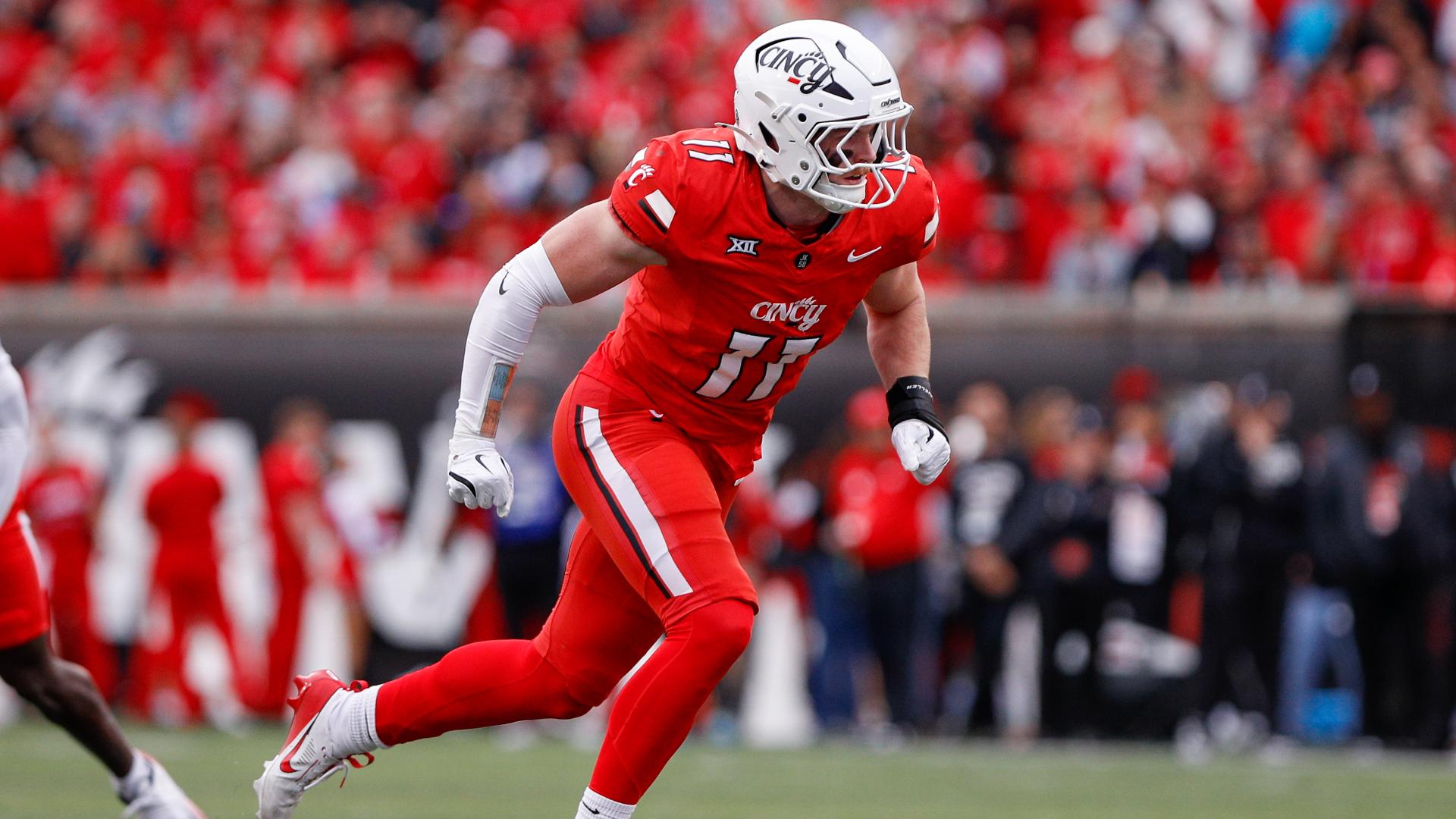
Joe Royer is Andrew Berry’s answer to losing David Njoku – and he’s a good answer. While the talent right out of college won’t be at the same level as Njoku’s was, his ceiling is extremely high: 62% of his 2025 yards came after the catch and he averaged a pickup of nearly nine yards after each reception. His 4.65 40-yard dash and impressive route running also allow him to create more separation than most 6’5”, 250-pound players, and the aggression with which he runs the football is rare even for tight ends. That being said, he is also a pick that will need to bulk up over the offseason – as he gets overpowered in his blocking assignments relatively often at his size. The threat he poses as a receiver should make Joe Royer another early contributor on our offense, but his true ceiling will be defined by how he develops as a blocker.
Round 6, Pick 182: Taylen Green, QB, Arkansas

Taylen Green is another draft pick that some fans were confused by and another one that I loved. With most day-three picks, you aren’t expecting to pick up a future star – you instead try to maximize potential and bring in prospects with uncoachable traits. He might’ve struggled with turnovers and accuracy at Arkansas, but Taylen Green’s athleticism is the definition of uncoachable. He set the QB combine records in both the broad and vertical jump events, and ran the fastest 40-yard dash (4.36 seconds) of all quarterbacks at the combine since 2003. Granted, many reporters and fans expect Green to make the switch to wide receiver (à la Terrelle Pryor) – which he said he didn’t want to do, but I’m sure he’d change his mind if he loses to the rest of the quarterback room in a position battle. On the other hand, nobody’s job in that room is secure – so if he’s able to make the leap to NFL quarterback, Taylen Green could be a starting quarterback in the near future (or at least bump someone else down the depth chart). At the bare minimum, he’s a 6’5” freak of nature who is one of the best pure athletes in the league. But if he develops into a startable player – no matter what position he’s lining up at – he will undoubtedly be yet another difference maker from this draft class.
Round 7, Pick 248: Carsen Ryan, TE, BYU
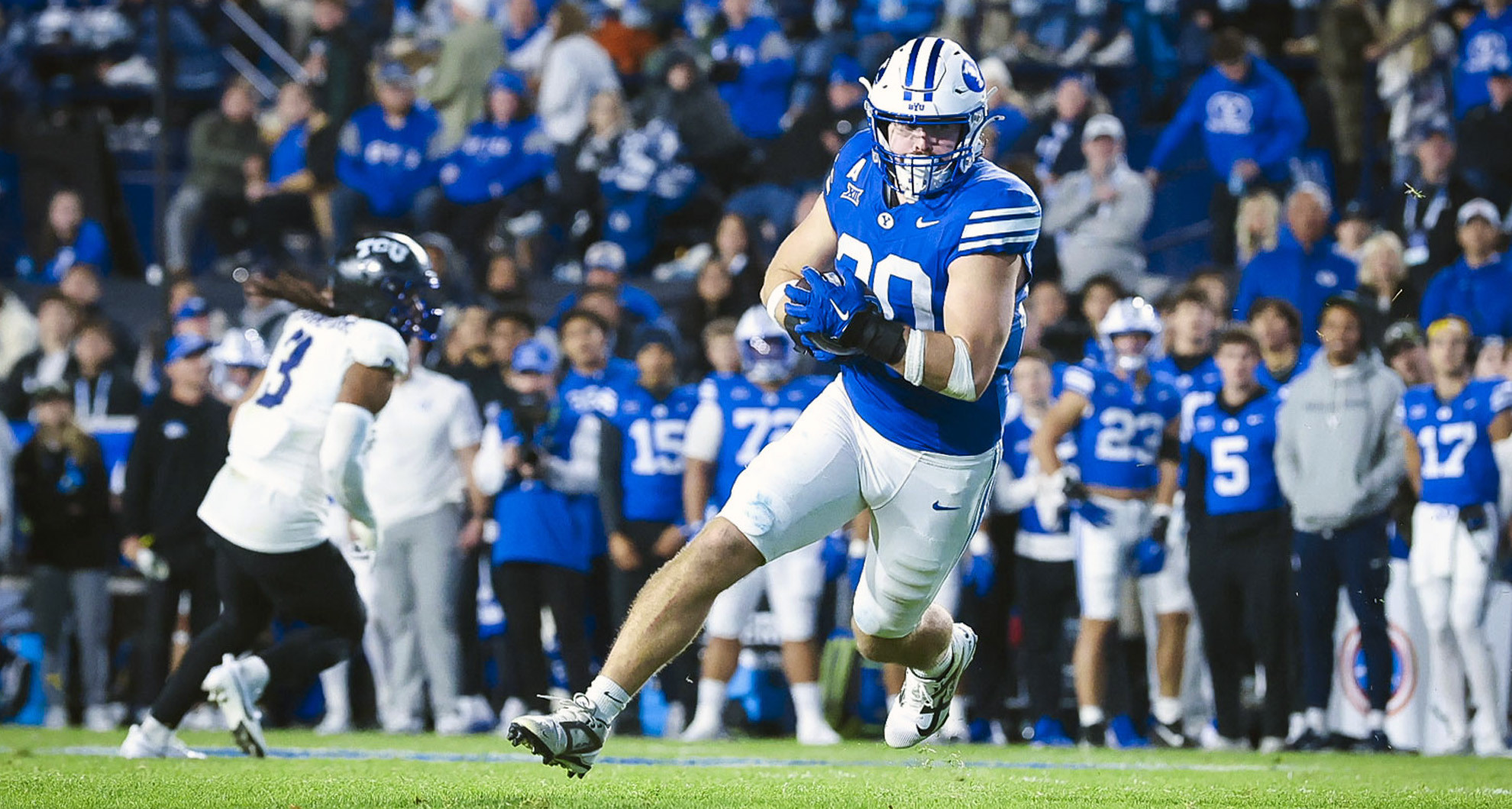
As our team’s Mr. Irrelevant, Carsen Ryan technically joins an impossibly crowded tight end room consisting of seven other players (including one chosen two rounds earlier) – but the lack of talent in the five behind Harold Fannin and Joe Royer gives the BYU tight end a clear path to making the roster. Ryan is productive as a receiver, accounting for 20% of his team’s receiving yards in 2025 by managing to find open space even with underwhelming speed and size – but despite this smaller frame, his most obvious path to the active roster will surely be his blocking ability. He’s great at not only finding but also creating lanes for his running back, which is probably the reason that he’s widely expected to be used as a fullback as well. Ryan’s blocks are most effective against smaller linebackers and defensive backs, but he has proven that he’s still willing to get his hands dirty against linemen in pass protection as well – allowing just five pressures and no sacks when lining up in-line last season. We already have a blocking tight end in Jack Stoll, but I have a feeling that Carsen Ryan will probably make the team as a hybrid TE/FB. After all, Todd Monken loved running his Baltimore offenses with Patrick Ricard at fullback, so if Ryan can make the switch, I’m sure he can lock up a roster spot.
The UDFAs to watch:

We obviously signed Logan Fano, Spencer’s little brother, and it would be incredible if we could keep the two paired up – but fighting Julian Okwara for the fourth spot (if there even is one) behind Garrett, Wright and McGuire is a tough task. Likewise, most of the players we signed after the draft are joining position rooms where they have little to no chance of winning an NFL contract. However, we did sign three UDFA wide receivers: 5’6” Ja’Naylon Dupree, 5’7” Kole Wilson, and 5’8” Aaron Anderson. I expect us to take six WRs into the 2026 season, and before these signings, I expected those six players to be Concepcion, Boston, Jeudy, Bond, Tillman, and either Corley or Wallace. However, bringing in three decidedly undersized receivers suggests that Todd Monken sought them out specifically for their height, and that he has a plan for whoever the best one turns out to be. Of course, they are undrafted free agents – so it’s entirely possible that none of them make the cut – but I think there’s a decent chance that one of them will.
I had originally expected 2026 to be a rebuilding year thanks to Deshaun Watson and Jerry Jeudy weighing down our salary cap, reserving 2027 in my mind as the year that Coach Monken’s vision would begin to take shape. But in our first three months with a competent football mind at head coach, he’s proved me wrong: we have completely replaced our crumbling offensive line and put together one of the best (if not the best) draft classes in franchise history. For as long as I can remember, we’ve had needs at every position but refused to fill them until we figured out the quarterback slot – somehow not realizing that no quarterback could ever succeed in the failing program left behind for them. In Monken and Berry’s first draft together, though, we’ve finally filled out the rest of the roster first and have true starters at every other position on the field. We may not know for certain who the QB of the future is, but we finally have a team that can support him. For the first time in a long time, I’m excited to wait and see what our coach has planned.